At a glance
-
5
markets: the UK, the US, Canada, India and Australia
-
6
personas, from seven customer groups
-
66
content ideas across 11 subjects, matched to formats
-
53
features rated need, should or could against effort
The brief
Tetley wanted its websites in five markets to share one set of templates. Before design could start, everyone needed the same picture of who the sites are for, what they should say and what they should do.
The challenge
Each market sells tea differently. Only the UK would sell direct, with a cart and an account. The US would link to a shop, and Canada talked about Amazon and needed English and French. Health content needed legal approval. And the audience ran from a lifelong fan who wants nothing to change to a young drinker who wants to know what's new.
My role
My experience department at Born ran the UX side of this discovery. I set the UX strategy and led the research and workshops with the team: the customer, persona, content and feature activities.
I articulated it through six personas, a content and module definition, a value matrix of 53 features and a sitemap for each region.
What we did
- Ran two days of creative and UX workshops in the UK, then sessions with Canada and the US and a video-call discovery for Australia.
- Mapped seven customer groups and turned them into six personas.
- Gathered 66 content ideas across 11 subjects and matched each to a format, giving a set of content modules.
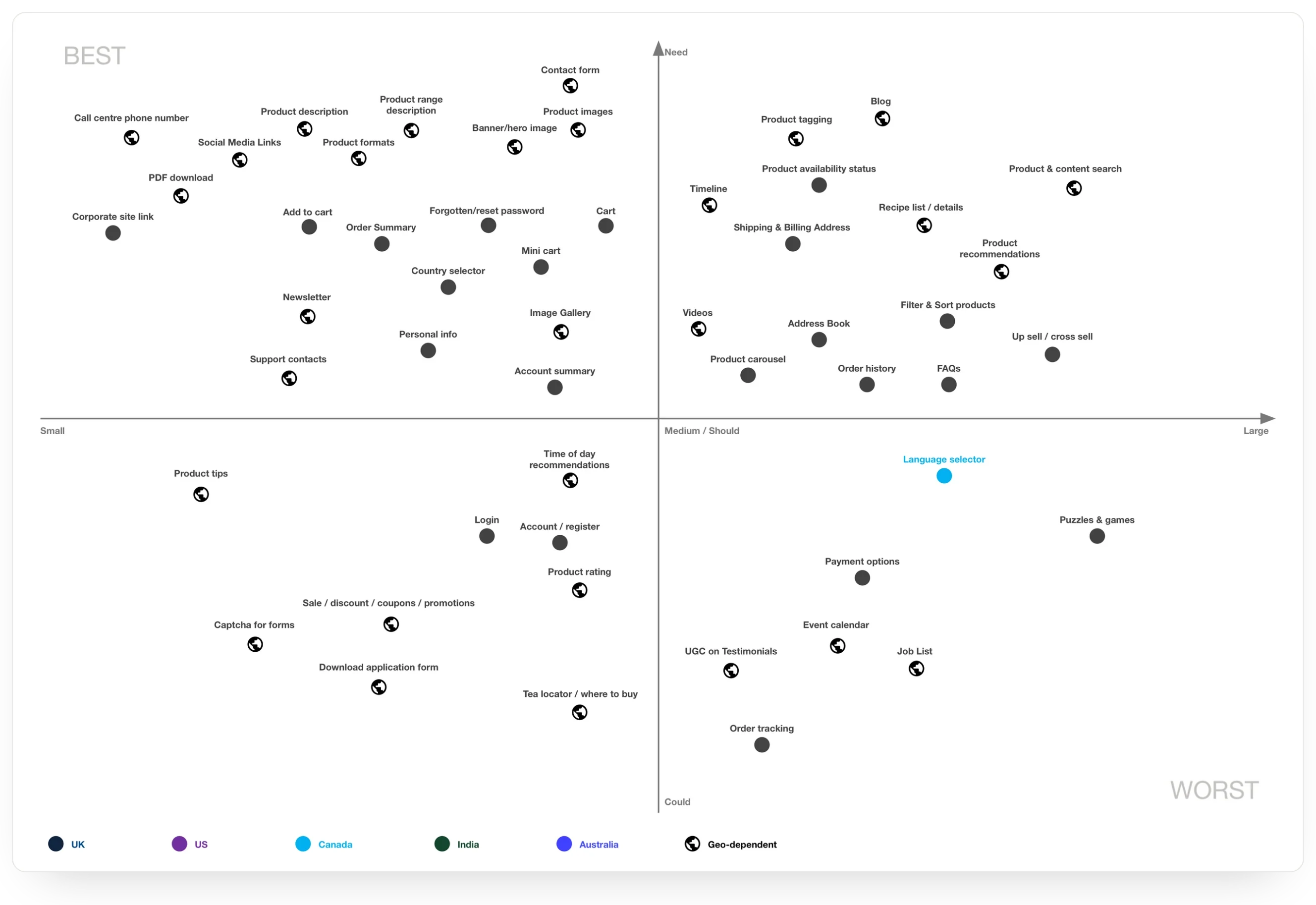
- Rated 53 features as need, should or could against effort, and marked the ones that depend on the region.
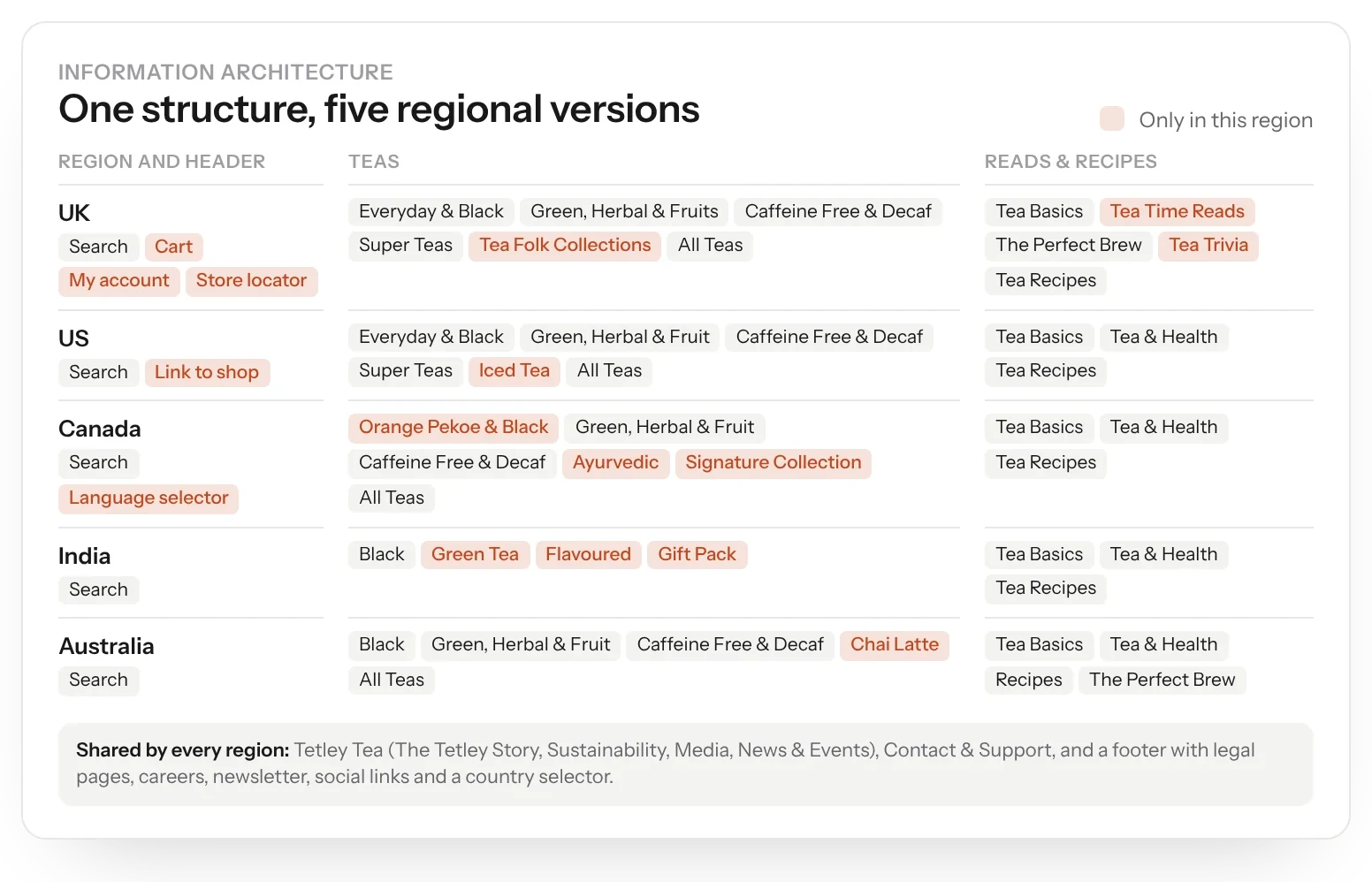
- Drew a sitemap for each of the five regions on one shared set of templates.
Workshops
Discovery opened with two days of workshops in the UK: the business, competitors, the brand, the current site and the platform first, then customers, journeys and content. Every exercise had a goal and a time limit, from writing the brand as a book to drafting personas.
In the US workshop, the team saw a real opportunity to sell online. Canada asked for nutritional facts on product pages.
Customer groups
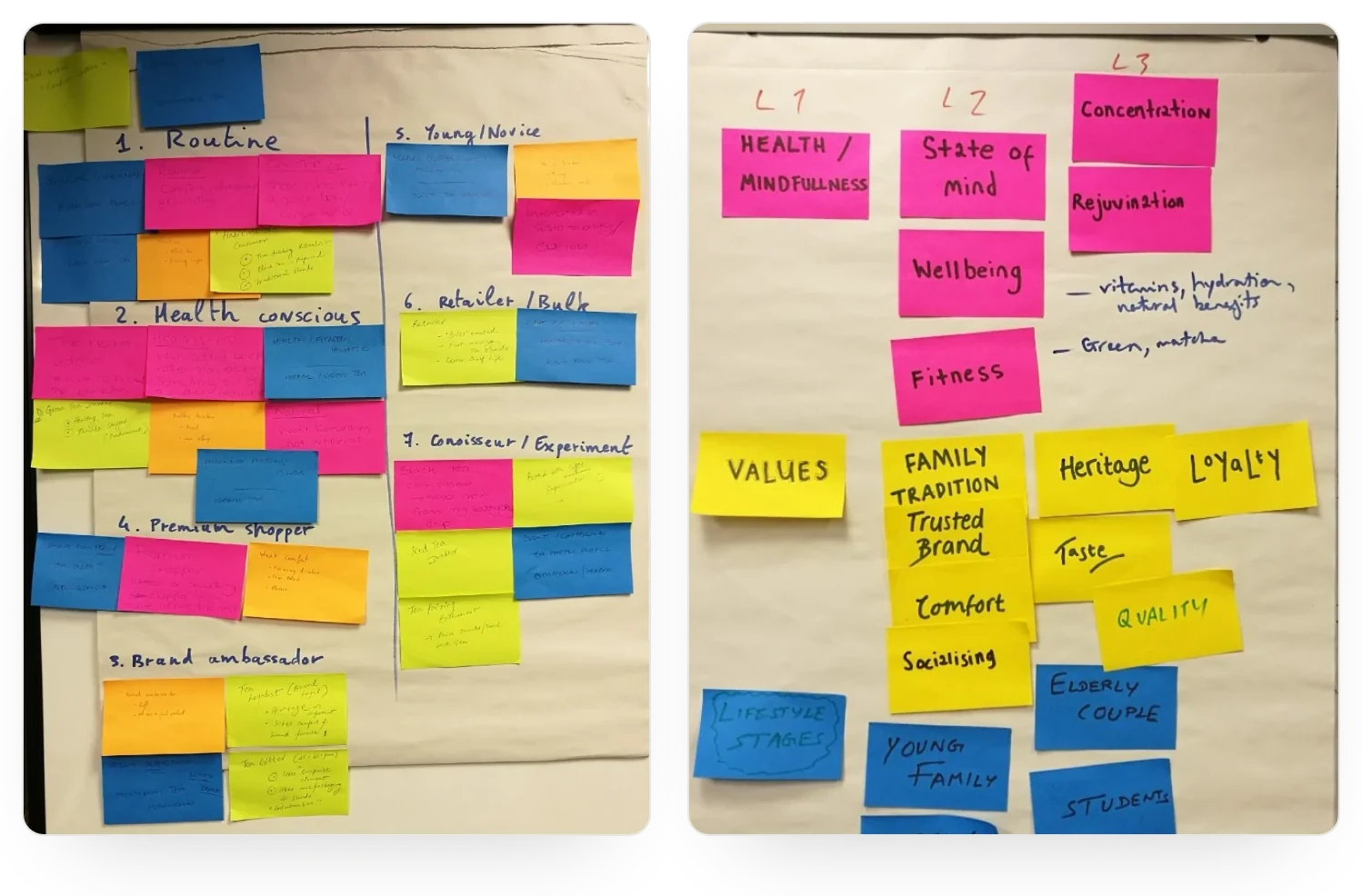
Tetley's teams named seven customer groups: routine, health conscious, brand ambassador, premium shopper, young or novice, retailer or bulk, and connoisseur. A second wall sorted what drives them: health and mindfulness, values such as family, heritage and trust, and lifestyle stages from students to elderly couples.
Personas
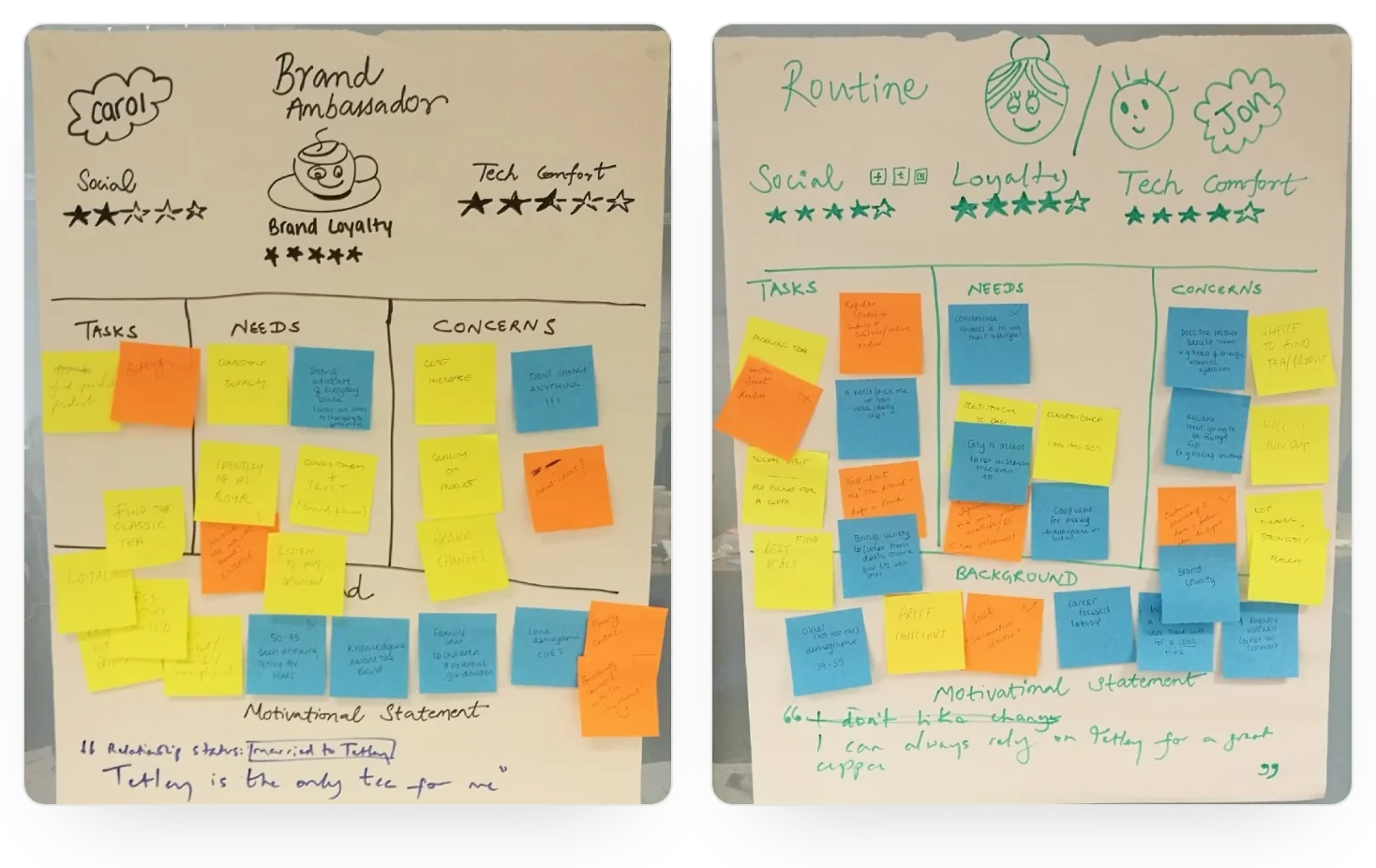
Each group became a proto-persona on one template, with tasks, needs, concerns and star ratings for social usage, brand loyalty and tech comfort. Consolidated, they became six personas. Grace, the Rookie: “What's new? What's good? Tell me!” Carol, the Brand Ambassador. Jon, the Routine drinker: “I can always rely on Tetley for a good cuppa.” Olivia, who is health conscious, Harriette, the premium shopper, and Stephen, the connoisseur.
Content
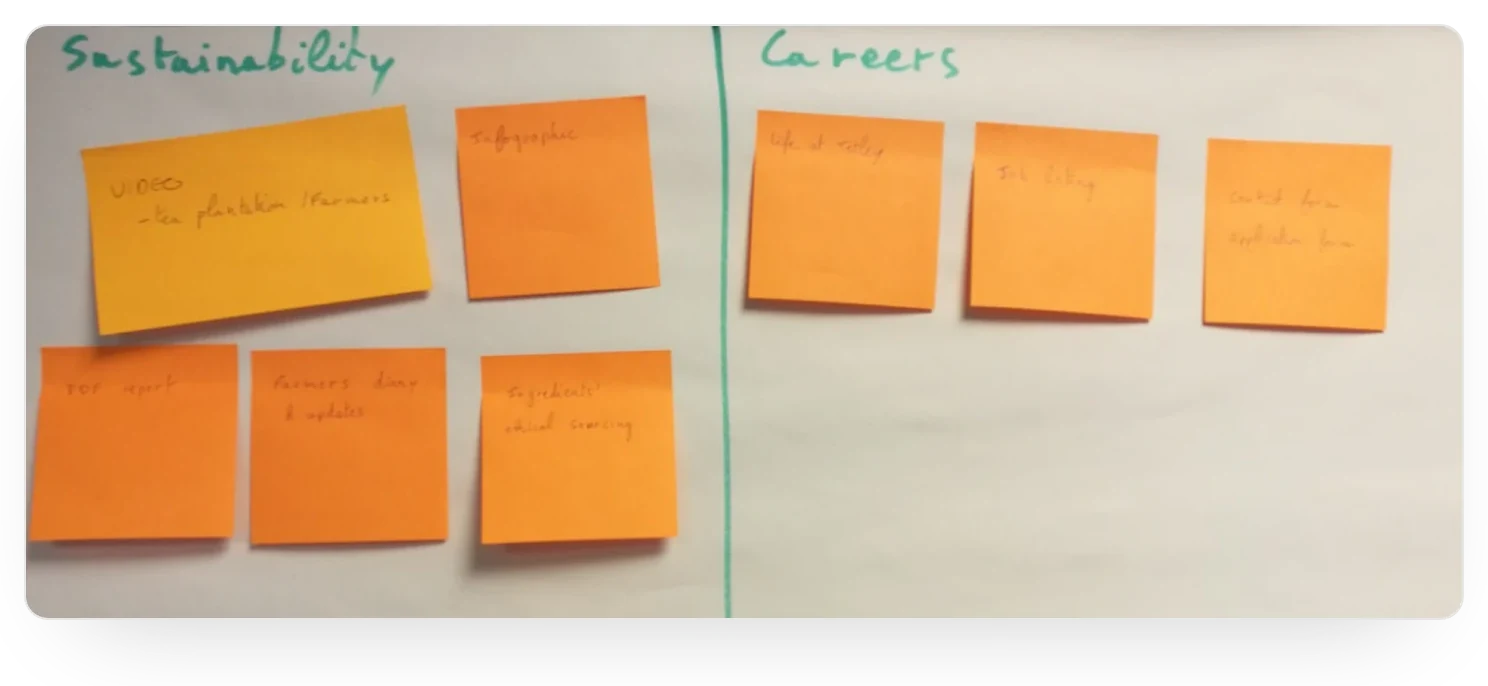
The UK content exercise produced 66 ideas across 11 subjects, from products and sustainability to heritage and careers: brewing tutorials, a tea recommender quiz, a sourcing map and farmers' diaries. 56.1% were engagement, 30.3% education and 13.6% esales. Matching each idea to a format, from video and quizzes to reviews and a store locator, gave the modules every page would be built from.
What the content ideas were for
Share of the 66 ideas, by purpose
View as a table
| Purpose | Share |
|---|---|
| Engagement | 56.1% |
| Education | 30.3% |
| Esales | 13.6% |
Features
We rated 53 features as need, should or could, with the effort to build each. On the matrix, the best value sat top left: a call centre number, product descriptions, a contact form and social links. Search, a blog and recommendations scored high but take more effort. Puzzles and games and order tracking fell to the bottom right. A globe marked every feature that depends on the region.
Information architecture
Last came a sitemap for each region on the same templates. The structure is shared: teas, reads and recipes, the Tetley story and support. The detail changes. The UK has a cart, an account, a store locator and the most to read. The US links to a shop and adds iced tea. Canada has a language selector and Ayurvedic teas, India gift packs and Australia chai latte.
Relationship status: Married to Tetley. Tetley is the only tea for me.
The result
A shared foundation for five regional sites: six personas, 66 content ideas with the modules to build them, 53 features prioritised by value and effort, and a sitemap for each market on one set of templates. This was discovery, setting up the UX strategy, user journeys and design production that the plan set out next.