At a glance
-
83%
of sales came from returning customers, who made up 37% of visits
-
44%
of visits lasted under ten seconds
-
13
customers interviewed in store, alongside four focus groups and 27 surveys
-
12
features prioritised, with 25 templates defined
The brief
Set the user experience strategy for Love, Bonito online, grounded in research with its customers and workshops with the team in Singapore.
The challenge
Returning customers made up 37% of visits but 83% of sales, and 44% of visits lasted under ten seconds. New-in launches drove loyalty, but popular pieces sold out, and customers wanted to know what was in stock before they made the trip to a store.
My role
My experience department at Born ran this work. I set the UX strategy and led the store research, focus groups and workshops in Singapore with the team.
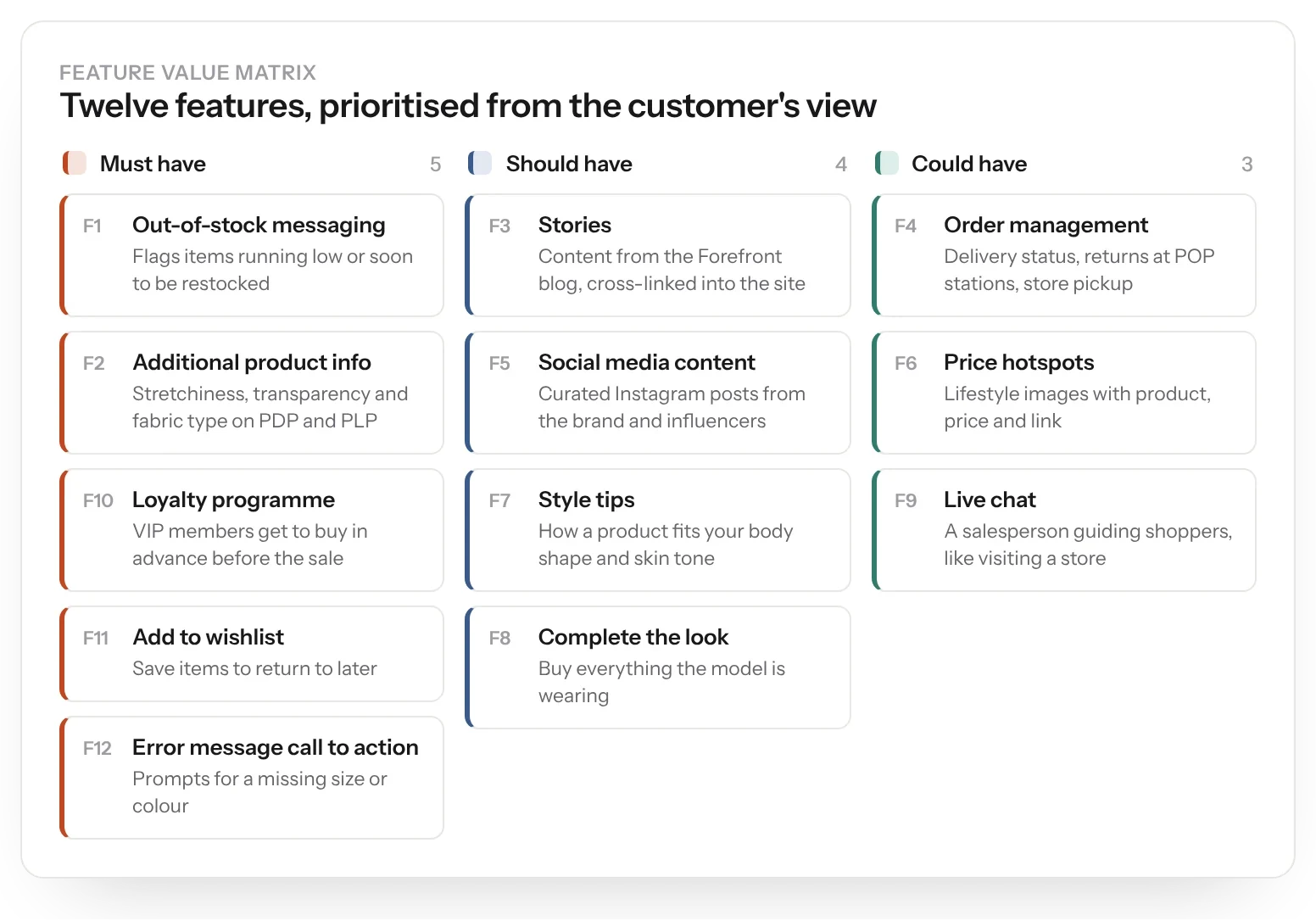
I articulated it in a UX strategy: personas, journey maps, a feature value matrix, an ecosystem map, a template inventory and a new sitemap.
What we did
- Studied a Love, Bonito store and interviewed 13 customers.
- Ran four focus groups across age bands, from under 24 to 39 and over, and analysed 27 surveys.
- Read the analytics: 769,000 visitors in a single month.
- Found six themes in what customers told us: practicality, style, scarcity, price, occasion and quality.
- Built three personas and mapped each journey to features and templates.
- Prioritised 12 features, defined 25 templates and cut the main menu to seven links at most.
Research
We went where the customers were: a store study with 13 customer interviews, four focus groups across age bands and 27 surveys, all mapped onto discover, browse, purchase and after purchase.
Analytics filled in the rest. Half of visitors came in through Home or New In, 44% of visits lasted under ten seconds, and 60% came from iPhones.
Themes
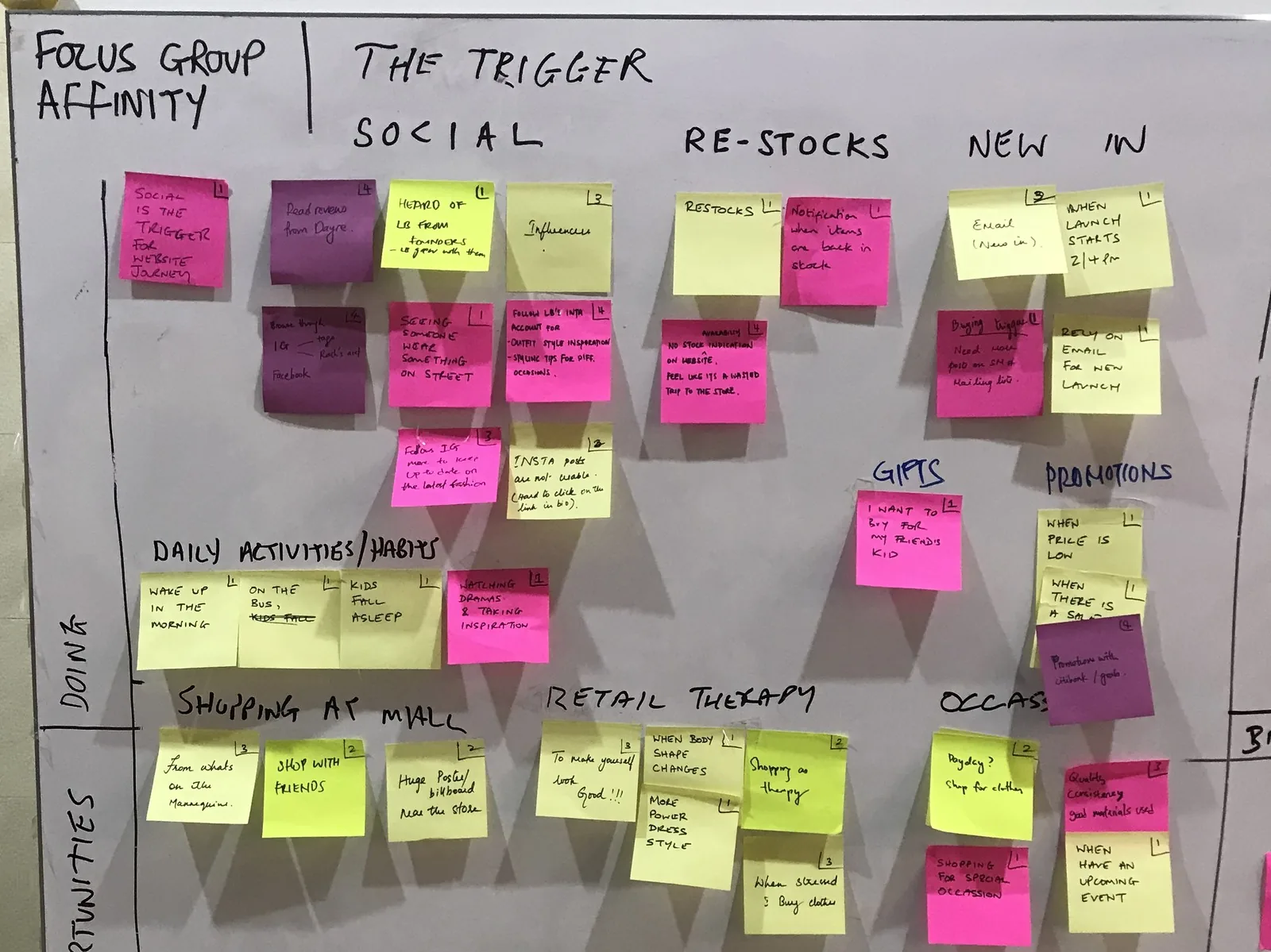
Pattern analysis across the research surfaced six themes: practicality, style, scarcity, price, occasion and quality. Customers said it in their own words: “Queue for fitting room is always insane.” “A personalised shopping experience would really help.”
Personas
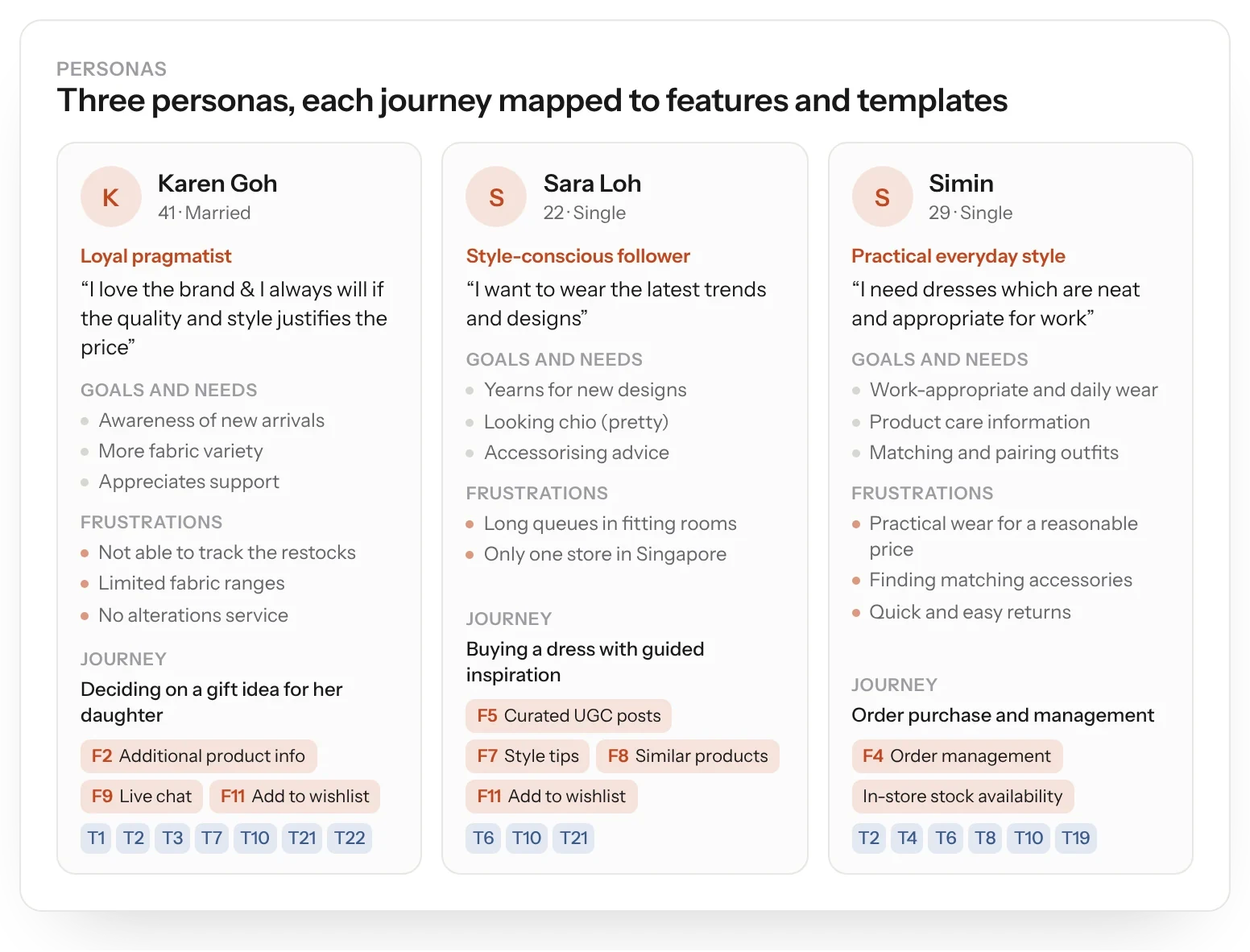
Three personas carried the themes into design: Karen, the loyal pragmatist (41); Sara, the style-conscious follower (22); and Simin, who wants practical everyday style (29). Each journey was mapped to the features and templates that serve it.
Strategy
The strategy came down to four points. New-in launches drive loyalty. Scarcity should be leveraged and mitigated. More product information reassures and converts. And customers want more from stores.
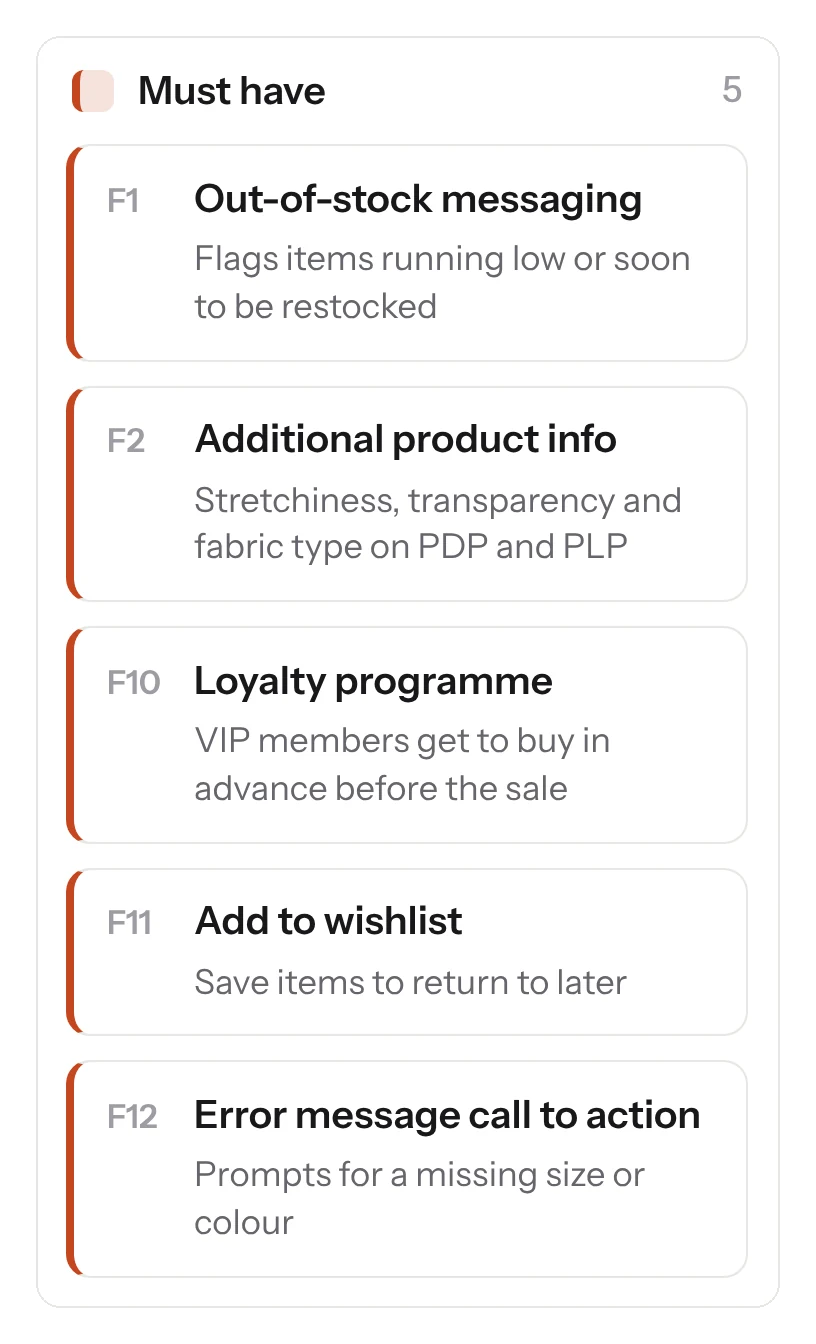
That shaped the feature list. The must-haves: out-of-stock messaging, more product information (stretch and transparency), VIP early access through a loyalty programme, a wishlist and clearer error messages. The sitemap was stripped back, with collections and occasions under Clothing, and Sale and Back in Stock shown only when they matter.
Website could indicate stock availability so that customer won't feel disappointed from making a wasted trip.
The result
A strategy the whole business could act on: launches and restocks at the centre of the experience, scarcity handled honestly, richer product information to give shoppers confidence, and stores and site working together. Twelve prioritised features and 25 templates set up design and build.