At a glance
-
6
weeks of discovery, mostly on site in the UAE
-
10
proto-personas: six kinds of visitor and four staff roles
-
~16
people across the UK, Dubai, India and Italy
The brief
DEI captures guests' photos at attractions, with cameras, QR and RFID tagging, kiosks and preview screens, printing, an app and back-office reporting. We set out how it should all work as one experience, for guests and for staff, then designed it.
The challenge
Guests need to find their photos, then edit, share and buy them on a kiosk, mobile web or the app, often as a group. Staff have their own journey, from capture to support. And China needed its own variations.
My role
I was UX Director, and my experience department ran the discovery. I set the experience strategy and led the research and workshops on site with the team.
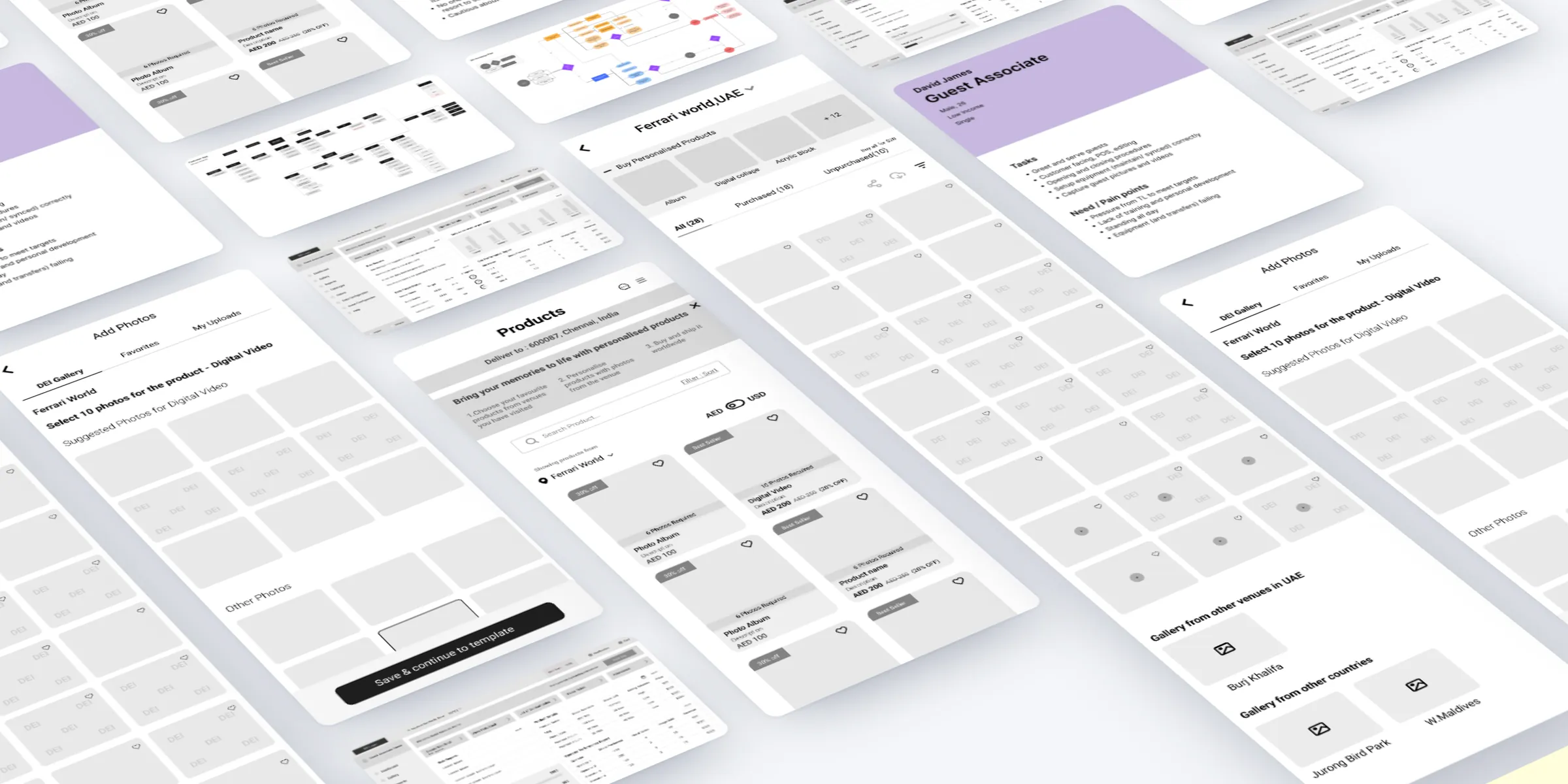
I articulated it through customer and staff journeys, paper prototypes, ten proto-personas and a signed-off feature value matrix, then in flows, sitemaps and wireframes for the customer and staff apps.
What we did
- Toured the venue and interviewed operations staff on site.
- Ran customer and staff journey workshops, each ending in paper prototyping.
- Mapped how guests find, edit, share and buy their photos, and how staff capture, transfer and print them.
- Built ten proto-personas: six kinds of visitor and four staff roles.
- Designed flows, sitemaps and wireframes for the customer app, website, kiosk and staff app.
- Brought together around 16 people across the UK, Dubai, India and Italy, plus FileSpin for asset management.
On site
Discovery ran over six weeks, mostly on site in the UAE. The first week covered the business and its systems. The second opened with a creative kick-off and a tour of the venue, with short interviews with operations staff along the way.
Journeys
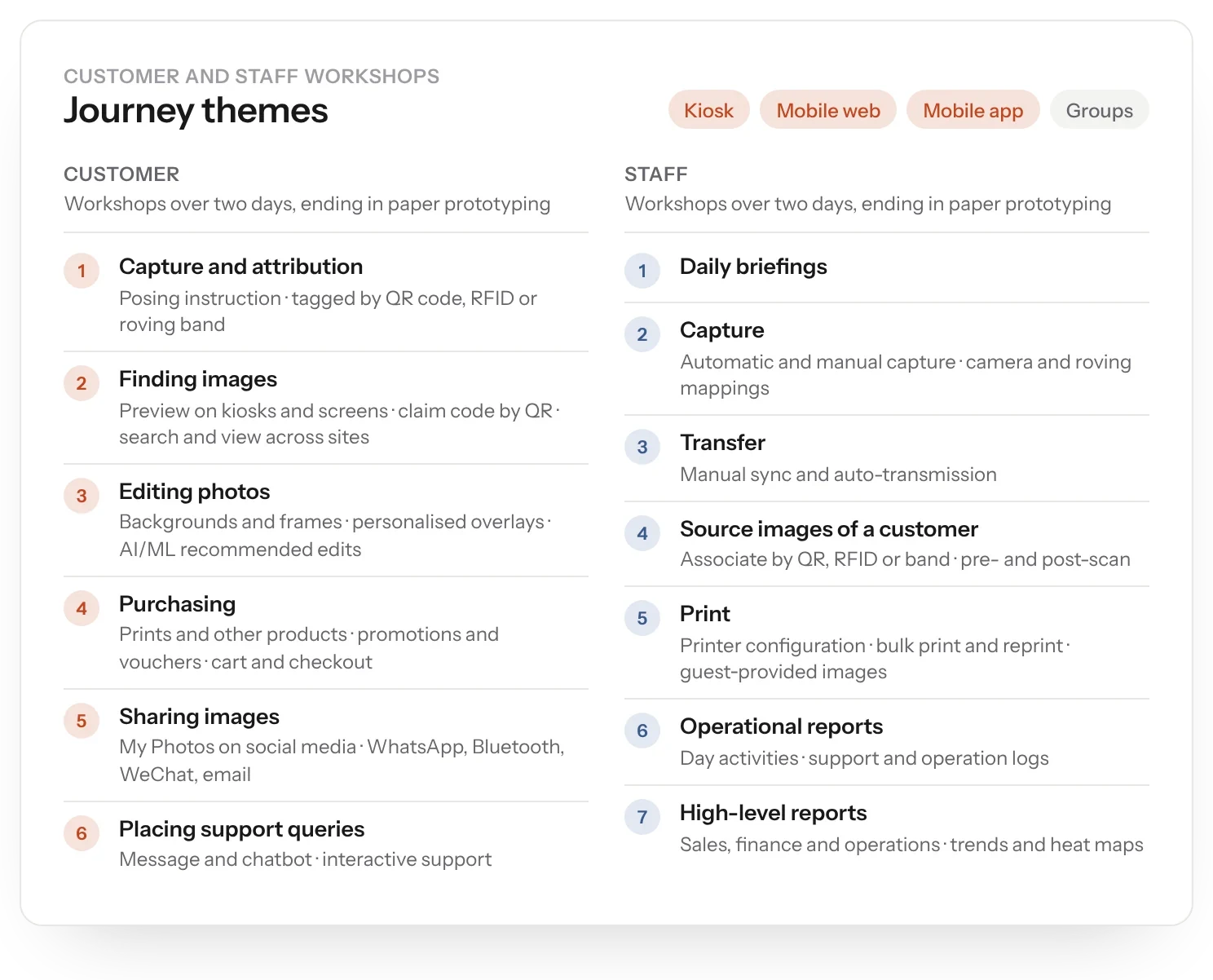
Customer journey workshops came next, then the staff journey, each over about two days. The customer side covered capture and attribution, finding images, editing, buying, sharing and support, across kiosk, mobile web and app. The staff side covered daily briefings, capture, transfer, printing and reporting.
Personas
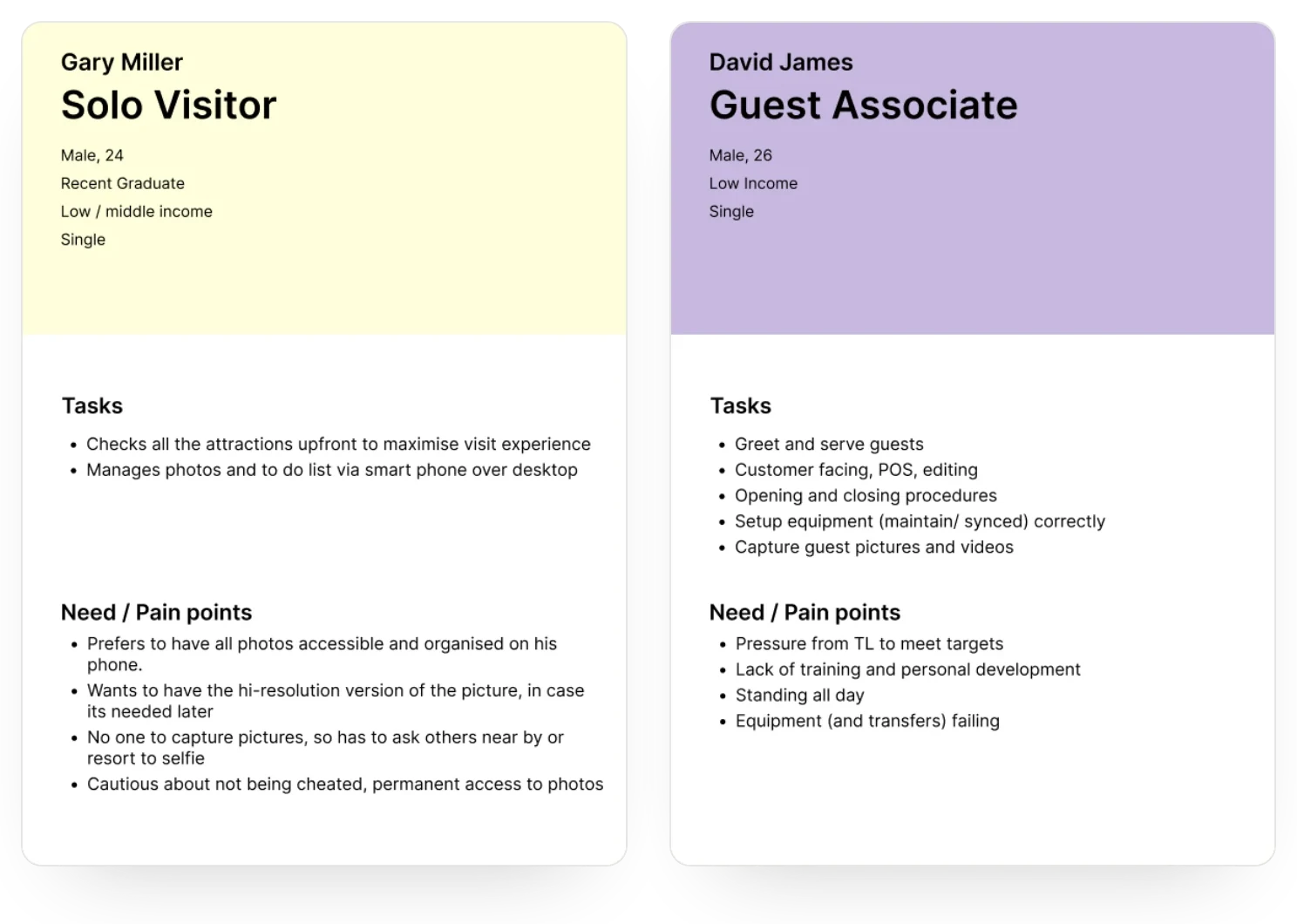
Ten proto-personas came out of the research: six visitors, from the solo visitor and couples to families, groups, annual pass holders and the digitally savvy, and four staff roles, from guest associates to site and area managers. Each set out tasks, feelings, pain points and what the design had to consider.
Gary, the solo visitor, wants every photo organised on his phone, in high resolution, with permanent access. David, a guest associate, needs a simple transfer process, equipment that works and feedback on how to earn more.
Prototyping
Each journey strand ended with half a day of paper prototyping, so we could test ideas quickly before anything went to screen.
Deliverables
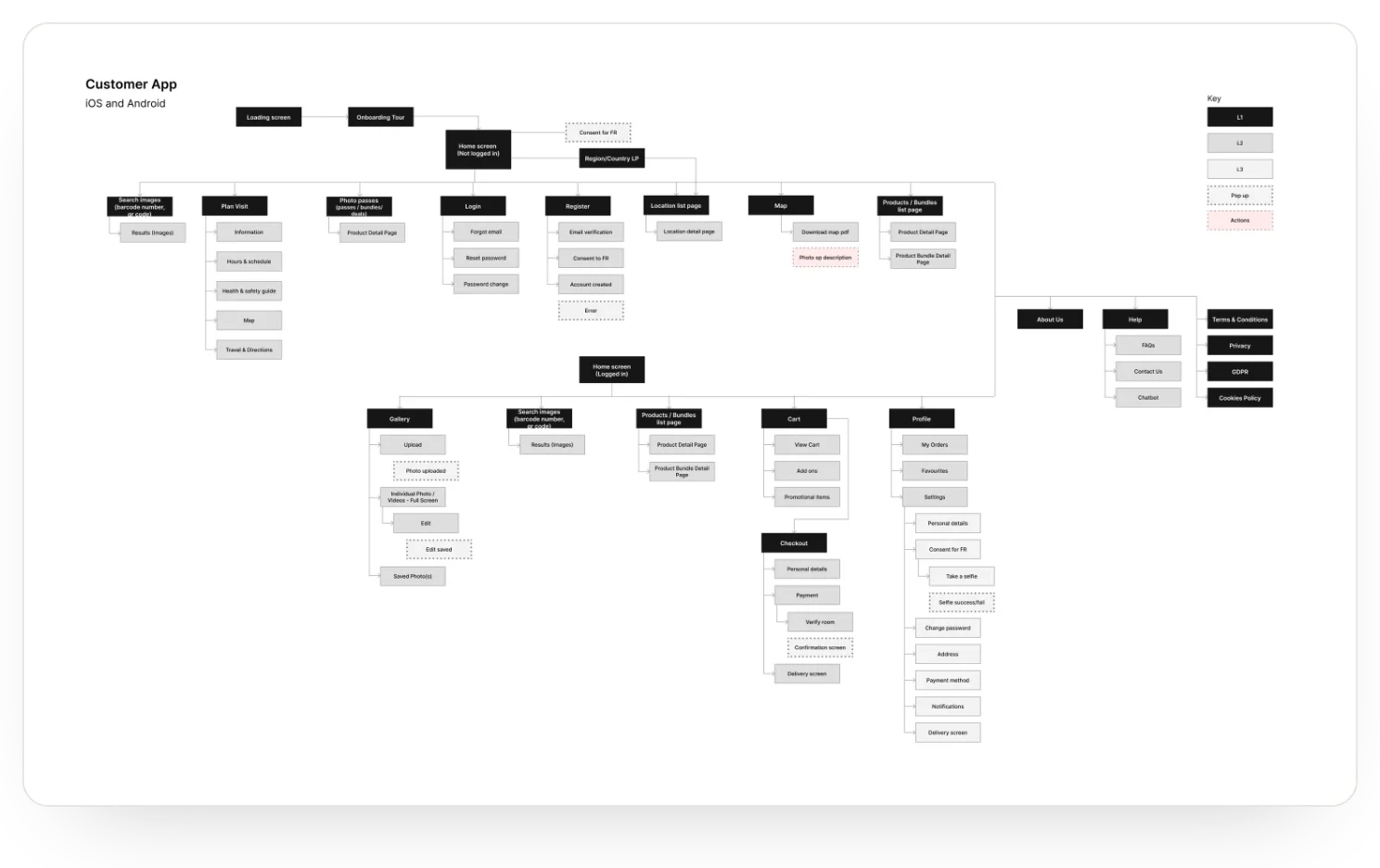
Discovery closed with a playback and sign-off: a feature value matrix, a logical architecture, first versions of the customer and operator journeys, proto-personas, templates for the app, web and back office, a sitemap, creative exploration and a high-level project plan.
Design
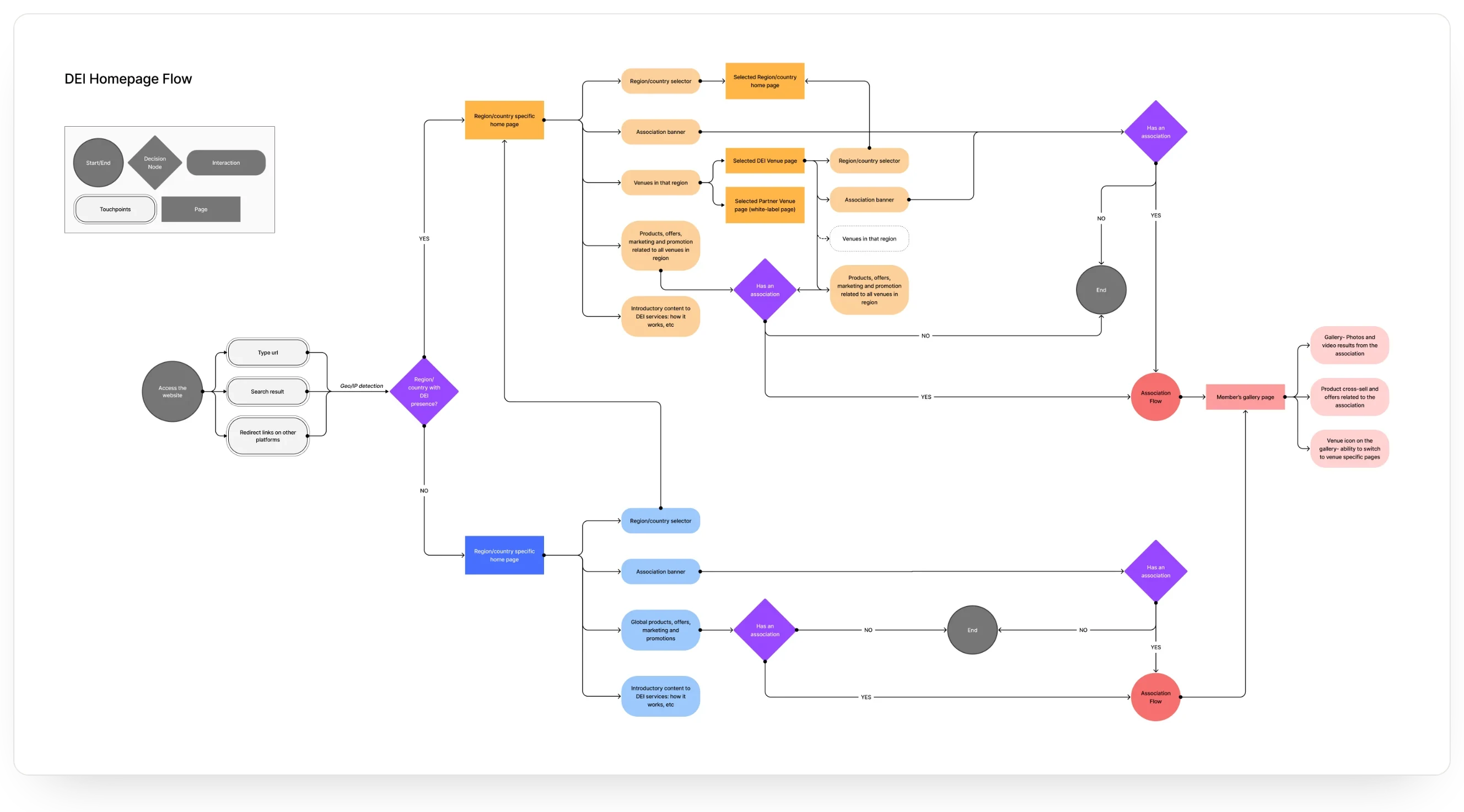
Design picked up from there. We mapped flows for the website, from a first visit to a member's gallery, and sitemaps for the customer app, responsive website, self-service kiosk, preview screens and staff app.
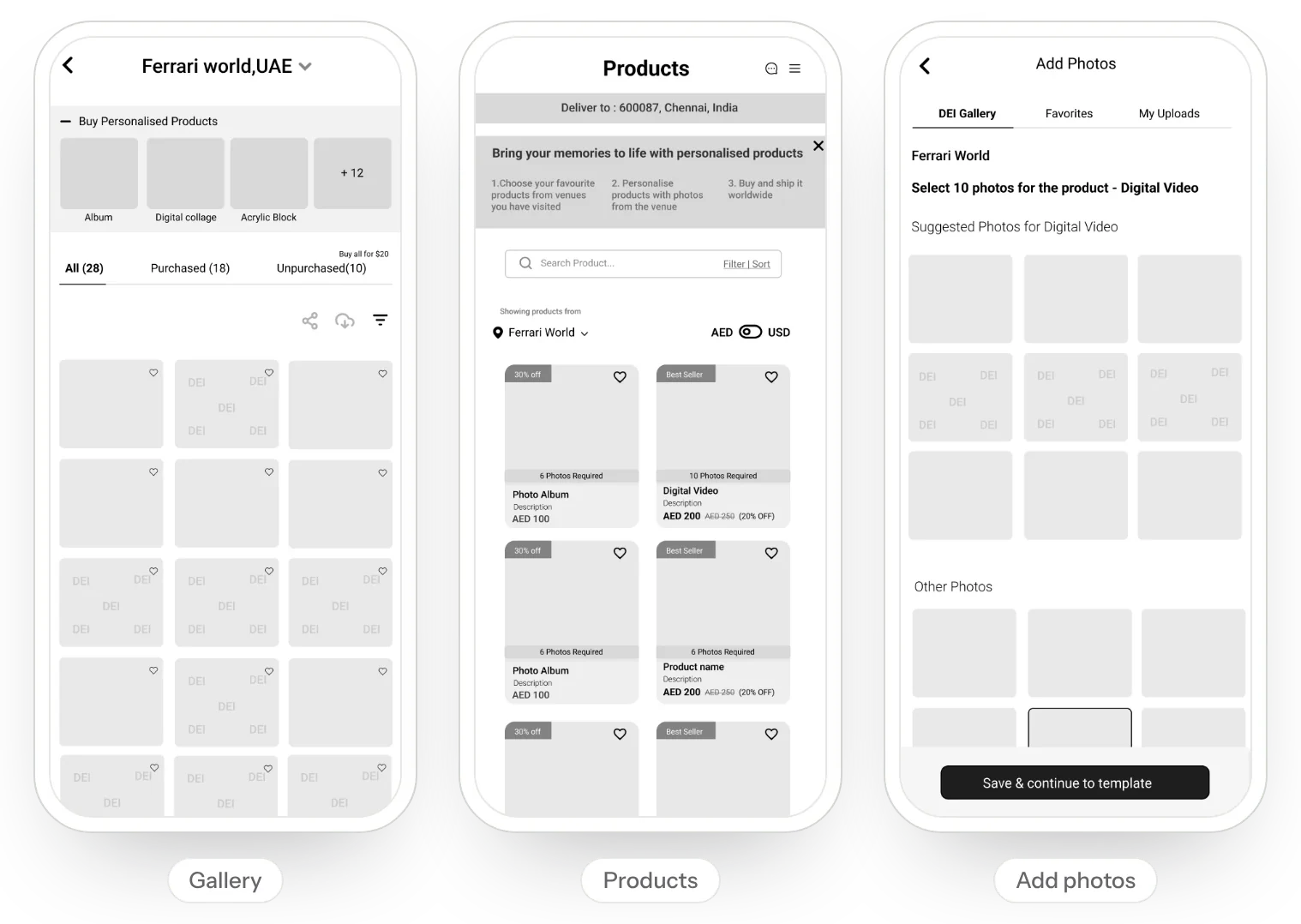
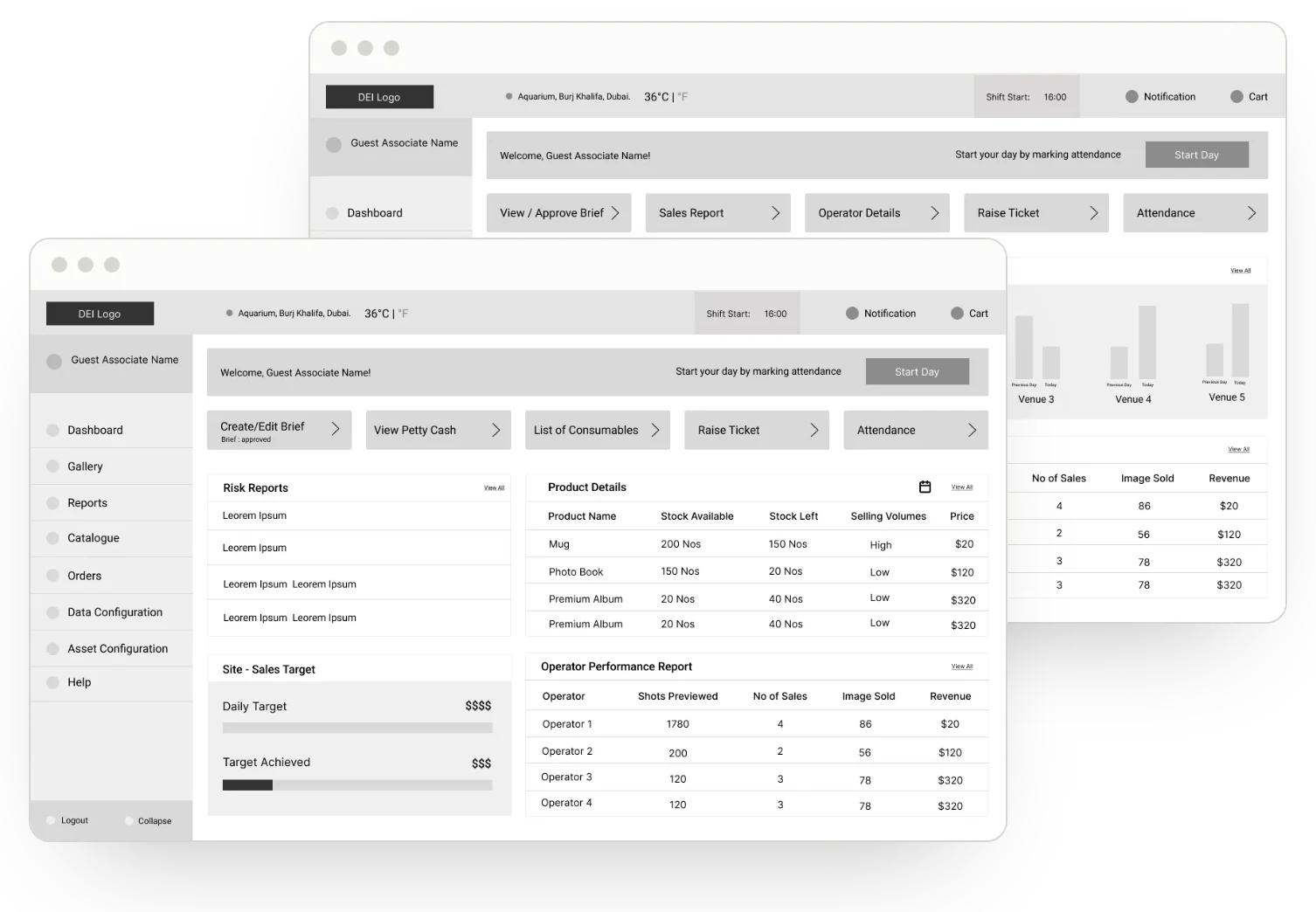
In the customer app, guests find their photos by venue, see what they've bought, choose photos for personalised products and edit them before checkout. The staff app gives each role its own dashboard: briefs, stock, sales targets and operator performance for site managers, and sales and performance across venues for area managers, with a daily briefing sheet that allocates each person's location and targets.
The result
A signed-off plan and a design for one guest photo platform across capture, kiosks, web, app and back office: journeys and personas for guests and staff, flows and sitemaps for every touchpoint, and wireframes for the customer and staff apps.